
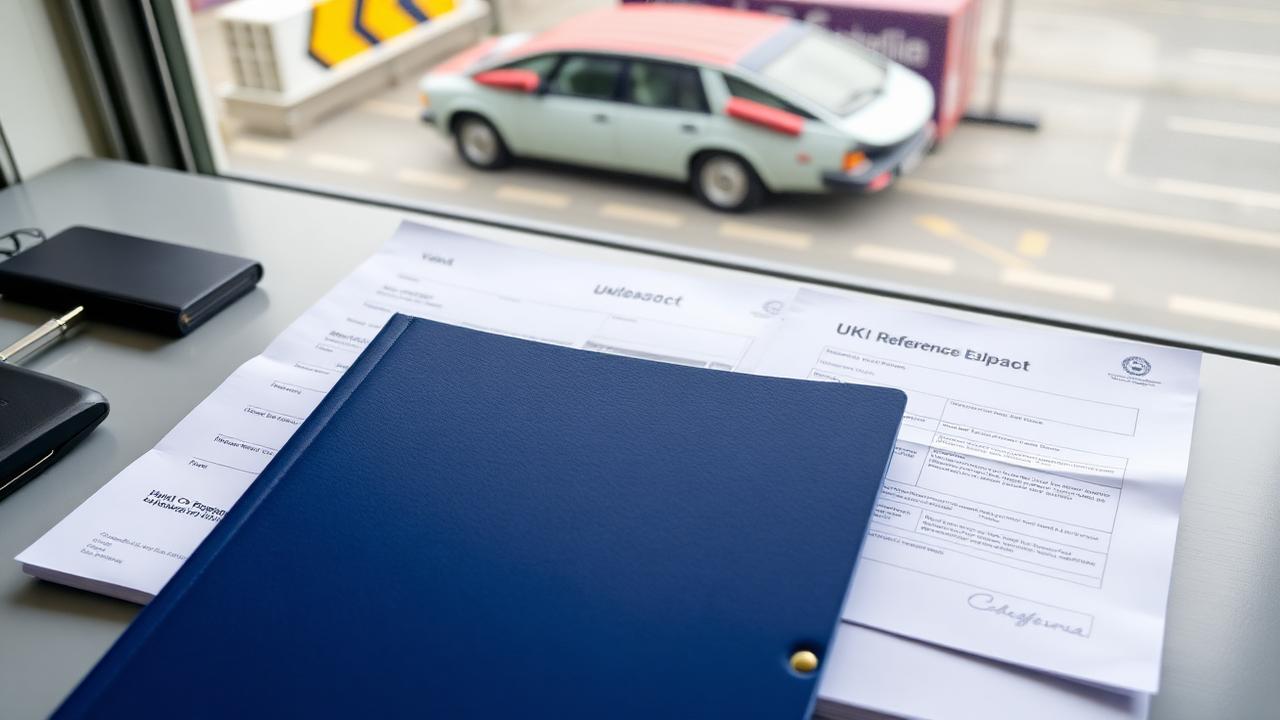
A practical 2026 walkthrough of UK vehicle export — DVLA V5C/4, NOVA, CDS customs declaration, EORI number and full export pack.
Step 1 — DVLA export notification
Send the V5C/4 (yellow slip) to DVLA Swansea on or before the export date, keeping the rest of the V5C with you for the buyer. Failing to notify keeps you liable for UK road tax and ULEZ charges. See our core export walkthrough.
Step 2 — NOVA and CDS customs declaration
If the vehicle is being permanently exported and replaced from abroad in your name, HMRC's NOVA system applies on re-import; for outright export you only need an export CDS declaration. EORI number is mandatory for the exporter of record. The UK customs CDS guide covers each field.
Step 3 — Commercial invoice, BL and EUR1
Build a commercial invoice with realistic CIF value, packing list, V5C copy, passport ID and the Bill of Lading. EUR1 movement certificate is required for preferential duty on certain EU/Med trade agreements.
Step 4 — Choose carrier, sail and confirm arrival
Pick RORO or container based on destination and vehicle value — see the RORO vs container guide — then confirm sailing in our RORO schedule. Get a free WhatsApp quote on 01482 228366 or use our instant cost calculator. Ship Cars RoRo has shipped vehicles to 50+ countries with full marine insurance and door-to-port handling.
EORI number — the first thing every UK exporter needs
An EORI (Economic Operators Registration and Identification) number is mandatory for every UK exporter filing customs declarations. Personal one-off exporters need a personal EORI; businesses and traders need a GB EORI tied to a VAT number. The number is free, issued by HMRC online, usually within 5 working days. Without an EORI you cannot file a CDS export declaration and the vehicle cannot legally leave the UK as commercial cargo. Hauliers and the shipping line will refuse loading. If you sell more than one car a year overseas, HMRC may consider you a trader and expect a business EORI and full record-keeping. Our team checks the EORI status before booking and assists with new applications free of charge.
The CDS export declaration in detail
Since 2024, all UK exports run through the Customs Declaration Service (CDS) — the previous CHIEF system is fully retired. A CDS export declaration for a used car needs: exporter EORI, consignee details, departure office (the UK port code), HS commodity code (typically 8703 for cars, 8704 for goods vehicles, 8711 for motorcycles, 8429 for plant), invoice value in GBP, gross weight, VIN, country of destination and shipping reference. The declaration is filed before goods presentation at the port; the system issues a Movement Reference Number (MRN) that the haulier presents at port gate. Most quotations from a freight forwarder include CDS filing in the price; DIY filing is possible through HMRC's CDS Trader Dress portal.
NOVA — when it applies and when it does not
NOVA (Notification of Vehicle Arrivals) is often misunderstood. NOVA applies to vehicles brought into the UK from abroad, not to vehicles being exported. If you are sending a UK car to the Middle East, NOVA is irrelevant — only the V5C/4 export notification to DVLA and the CDS export declaration matter. NOVA only becomes relevant if you are re-importing a vehicle you previously exported, or moving a personal-effects car to the UK from overseas. For pure outbound export, focus on V5C/4 + EORI + CDS + Bill of Lading + commercial invoice. See the UK customs CDS guide for the full picture.
Commercial invoice and CIF valuation
The commercial invoice is the single most important document for destination clearance. It must state: exporter (your name and UK address), consignee (the buyer or yourself at destination), vehicle description (make, model, year, VIN, mileage), agreed sale value or, for personal export, market value, INCOTERMS (typically CIF Port-of-Destination), currency, signature and date. Under-declaring the invoice value to dodge destination duty is a serious offence in most jurisdictions — UAE Customs and Australian Border Force both maintain UK market-value databases and will revalue suspect invoices, sometimes with a penalty. Always quote a realistic CIF value backed by a UK invoice, auction receipt or HPI valuation.
Final pre-sail checklist and after-sail tracking
On the day of port delivery, the vehicle should have: under 25% fuel, no personal effects (for RORO), V5C/4 already sent to DVLA Swansea (keep the rest of the V5C with the buyer or with you for re-registration overseas), keys in two sets, original purchase invoice photocopied for the buyer, and 12 photos of the car's external condition taken in front of a witness. Once loaded, the shipping line issues the Bill of Lading within 3–5 working days; we forward both the BL and the loading photos to the consignee. Track vessel progress through the line's portal or on MarineTraffic. Get a free WhatsApp quote on 01482 228366 or use the cost calculator to start a new export today.
VAT, MTIC and the role of HMRC checks in 2026
Used-car export is one of HMRC's higher-risk categories for MTIC (Missing Trader Intra-Community) fraud, and exporter checks have tightened in 2026. If you VAT-reclaim on an export, HMRC may request the export Bill of Lading, CDS declaration, sale invoice to overseas buyer and proof of payment within 90 days. Personal one-off exporters of their own car are usually outside VAT scope. Traders moving multiple vehicles should keep a clean evidence pack per shipment: V5C/4 confirmation, EORI-tied CDS MRN, BL, commercial invoice, buyer's overseas business registration and payment proof from a regulated banking channel. Cash sales to overseas buyers without bank trace are now routinely investigated.
Common UK-export mistakes that cost time and money
The five most common UK export mistakes we see in 2026: (1) Forgetting to send V5C/4 to DVLA, leaving the seller liable for road tax and ULEZ. (2) Loading a car with personal effects on a RORO booking, causing offload at the port and a £350–£500 storage charge. (3) Under-declaring CIF value on the commercial invoice, leading to revaluation and penalty at destination customs. (4) Wrong HS commodity code on the CDS declaration (8703 for cars, 8704 for goods vehicles, 8711 for motorcycles, 8429 for plant) — wrong code = wrong destination duty. (5) Booking RORO for a non-runner — the carrier will reject loading. Each of these is avoidable with a 10-minute pre-shipment checklist call with our team.
UK collection, recovery and onward transport
Before any international shipment, vehicles need to reach the loading port — and many customers ask us to handle the UK leg too. Our recovery and transport network covers every postcode, 24 hours a day.
Start with the main hubs: Car Recovery UK, Vehicle Recovery UK, 24/7 Breakdown Recovery and Nationwide Vehicle Transportation.
City coverage includes London, Birmingham, Manchester, Liverpool, Leeds, Glasgow, Sheffield and Bristol.
Pre-book a port run on a flatbed transporter from Southampton, Portsmouth, Liverpool or Felixstowe via Ipswich, or call 24/7 for breakdown recovery in London, Birmingham or Manchester.
Frequently Asked Questions
Do I need an EORI number to export a car from the UK in 2026?
When do I send the V5C/4 to DVLA?
Is NOVA needed for an outright export?
Ready to Ship Your Vehicle?
Get a free, no-obligation quote for international vehicle shipping from the UK. Check our destinations or use the cost calculator.
Written by
Zahir
SEO & Logistics Expert
Zahir is a seasoned SEO strategist and content writer specializing in international logistics, vehicle shipping, and automotive culture. With over a decade of experience in the shipping industry, he provides expert insights to help customers navigate the complexities of international vehicle transport.