
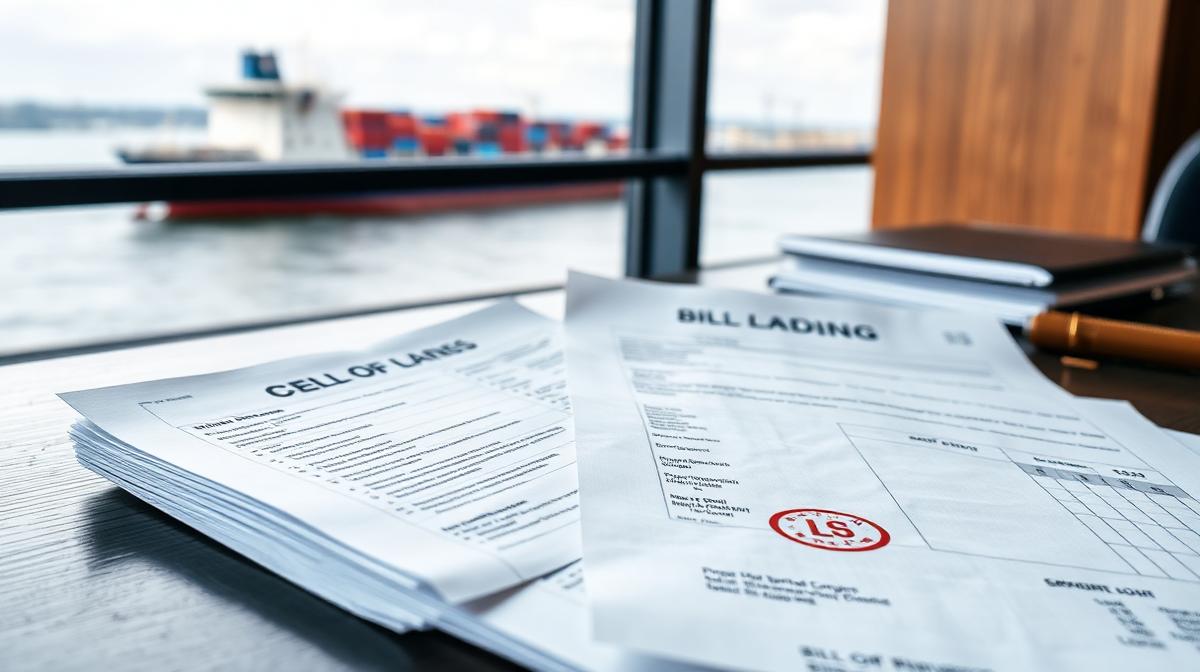
The Bill of Lading is the single document that proves ownership of a shipped vehicle. Here is what it contains, how releases work, and the errors that strand cars at the destination port.
What a Bill of Lading actually is

The Bill of Lading (B/L) is issued by the shipping line or the NVOCC once your vehicle has been loaded. It does three jobs at once: it is the receipt proving the carrier took the car, it is the contract of carriage setting out the terms, and — critically for vehicles — it is a document of title. Whoever lawfully holds the original B/L is entitled to collect the car at the destination port.
That third function is why the B/L matters more for car shipping than for almost any other document. Customs at the destination will not open a file without it, the port will not release the unit without it, and no registration authority will title a vehicle whose import cannot be evidenced. If you take one thing from this guide: never let the B/L details drift from the V5C and the invoice.
Every field that must be correct
- Shipper: the exporter of record. For a private export this is normally the registered keeper named on the V5C.
• Consignee: the party entitled to collect. Either a named person/company or "to order" if the document is negotiable.
• Notify party: who the line contacts on arrival — usually your clearing agent at the destination.
• VIN / chassis number: 17 characters, matched letter for letter to the V5C. A single transposed character means an amendment fee and, in the Gulf and West Africa, a customs penalty.
• Make, model, year, colour, engine number where the destination requires it.
• Declared value and Incoterm (typically CIF or CFR for vehicles).
• Port of loading and port of discharge, plus the final destination if inland haulage is included.
• Weight and cubic measurement for RoRo, or container and seal number for containerised units.
Check the draft B/L the day it is issued. Amendments are cheap before the vessel sails and expensive afterwards — lines charge £75–£250 per correction and some refuse changes once the manifest has been filed with destination customs.
Original, telex release and seaway bill

Original B/L (three signed originals): the classic negotiable set. The consignee must physically present one original at the destination agent's counter. Use this when payment security matters — the car cannot be collected until you release the paper.
Telex release / express release: you surrender all originals at origin and the line cables the destination office to release against identity alone. Faster and the standard choice when you are shipping your own vehicle to yourself, or when funds have cleared in full.
Sea waybill: non-negotiable from the outset, released to the named consignee only. Common on short European trades and increasingly on UK to Ireland Ro-Pax moves.
A practical rule: if you have not been paid in full, ship on originals. If you are the buyer and the seller controls the originals, budget three to five working days of courier time and do not book onward transport until the set is in your hands.
How the B/L fits the rest of the export file
The B/L never travels alone. A complete UK vehicle export file contains the V5C (or the certificate of destruction/permanent export section), the purchase invoice, the full export document checklist, the HMRC customs declaration reference, proof of insurance and, for many destinations, a pre-shipment inspection certificate.
Customs at destination reconcile all of it against the B/L. Where the invoice value and the B/L declared value differ, the higher figure is normally taken as the duty base. Where the consignee on the B/L differs from the buyer on the invoice, expect the file to be held pending explanation. Consistency across every document is what keeps a clearance to two or three days rather than two or three weeks.
The five failures we see most
1. VIN typo — by far the most common, and the most expensive at Jebel Ali, Tema and Tin Can Island.
2. Consignee named as a person when the destination requires a company with an import licence — reissue is the only fix.
3. Originals posted to the wrong address while demurrage accrues at £40–£120 per day.
4. No notify party, so the arrival notice goes nowhere and free time expires unused.
5. Value declared low to reduce duty. Destination customs use their own valuation tables anyway, and the penalty in most Gulf and African jurisdictions is a multiple of the duty avoided.
If you would rather not manage the paperwork yourself, our documentation team prepares and checks the whole file as part of every booking. Request a quote and we will confirm exactly which documents your destination needs.
Frequently Asked Questions
Can I collect my car without the Bill of Lading?
What is the difference between a Bill of Lading and a shipping invoice?
How long does a telex release take?
What happens if the VIN on the Bill of Lading is wrong?
Ready to Ship Your Vehicle?
Get a free, no-obligation quote for international vehicle shipping from the UK. Check our destinations or use the cost calculator.
Written by
Zahir
SEO & Logistics Expert
Zahir is a seasoned SEO strategist and content writer specializing in international logistics, vehicle shipping, and automotive culture. With over a decade of experience in the shipping industry, he provides expert insights to help customers navigate the complexities of international vehicle transport.