

Short answer: clean the car inside and out, leave a quarter tank of fuel or less, remove personal items, photograph every panel, and have your V5C, ID and invoice ready. Here is the full checklist.
Quick answer: what does preparing a car for export involve?
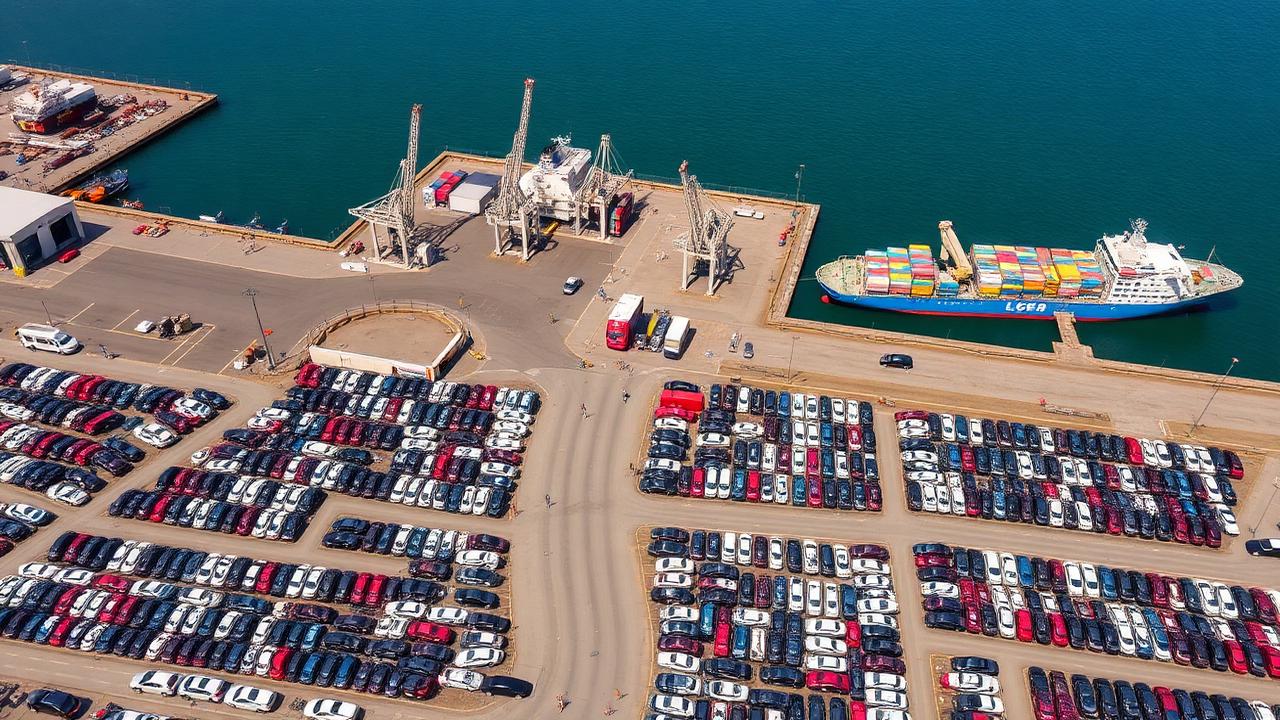
Preparing a car for export from the UK means making it legally shippable, physically safe to load and easy to clear at destination. In practice that comes down to seven jobs: gather the documents, wash the car, run the fuel down, check the battery and tyres, remove personal belongings, record its condition, and book the handover at the port or with a collection driver.
Most vehicles can be prepared in a single weekend. The cars that get delayed at UK ports are almost never delayed for mechanical reasons — they are held because the paperwork does not match, the car is dirty enough to fail a biosecurity check, or it is full of personal items the shipping line will not accept. This checklist removes all three risks. If you have not yet chosen a method, read our RoRo shipping service and container shipping service pages first, because the preparation differs slightly between them.
Step 1: Get the export documents in order
Documents cause more delays than any other part of the process. Before the car moves, confirm you have:
- V5C logbook in the name of the person or company exporting the car. If you have just bought it, the keeper change must be completed first.
• Photo ID — passport or driving licence — matching the V5C name.
• Purchase invoice or proof of value, which destination customs will use to calculate duty.
• Proof of address for the exporter.
• Finance settlement letter if the car was ever on finance. Ports and shipping lines check for outstanding finance, and a flagged car will not be loaded.
• Destination-specific paperwork, such as a pre-shipment inspection for some African markets or conformity documents for the Gulf.
Once the car ships, the line issues a Bill of Lading — the document of title that lets you collect it abroad. Every detail on it, especially the 17-character VIN, must match the V5C exactly. Our documents required page lists the full file by destination, and the UK vehicle export guide explains how to notify DVLA of a permanent export.
Step 2: Clean the car inside and out
A clean car is not cosmetic — it is a compliance requirement. Australia, New Zealand and increasingly the Gulf states run strict biosecurity inspections. Soil, seeds, leaves or insects in the wheel arches, engine bay or boot can trigger a mandatory steam clean at destination, often costing £150–£400 plus several days of storage.
Wash the exterior including the underside and wheel arches, vacuum the interior and boot, and empty door pockets and the glovebox. A clean car also makes the condition report accurate: scratches and dents are easy to miss under dirt, and any damage not recorded at handover is much harder to claim for later. If you are shipping to Australia, read shipping a car to Australia for the specific cleanliness standard.
Step 3: Fuel, battery, tyres and fluids
- Fuel: leave no more than a quarter of a tank. Shipping lines limit fuel for fire safety, and a full tank can be refused at the gate.
• Battery: it must be charged and securely fitted. RoRo cars are driven on and off the vessel, so a flat battery at discharge means jump-starting fees and delays. Disconnect aftermarket alarms or trackers that may drain it on a long voyage.
• Tyres: inflate to the correct pressure and check for slow punctures.
• Fluids: fix any oil, coolant or brake-fluid leaks. Leaking vehicles can be rejected at the terminal.
• Electric and hybrid cars: charge between 30% and 50%, and tell us in advance — EVs have their own handling rules on many vessels.
Non-runners can still be shipped, but they must go in a container or on a flat rack rather than by RoRo. Our RoRo vs container comparison explains which method suits a non-running car.
Step 4: Remove personal belongings
By RoRo, the car must be empty apart from standard factory items such as the spare wheel, jack and owner's manual. Personal effects are not insured, may be stolen during loading, and can create a customs problem at destination because they were not declared.
If you want to ship belongings with the car — common for people relocating overseas — choose a sole-use or shared container, where goods can be packed, listed on an inventory and declared correctly. Remove the dashcam, sat-nav, toll tags and parking permits too, and take off any loose roof boxes or bike racks unless they are listed on the booking.
Step 5: Photograph and record condition

Take date-stamped photos of every panel, the roof, the wheels, the interior and the odometer on the day of handover. Film a short walkaround video as well. The terminal or collection driver will complete a condition report — check it carefully before you sign it, and make sure existing marks are noted.
This record is your evidence if you need to claim on marine insurance. Without it, a claim for a scratch or dent becomes one person's word against another's.
Step 6: Hand the car over
You can deliver the car to the port yourself or have it collected. UK exports typically leave from Southampton, Portbury (Bristol), Tilbury, Liverpool or Felixstowe — see our guide to the best UK ports for vehicle export. Bring your booking reference, ID and a spare key; RoRo lines need a working key left with the car.
Check the next available departure on the RoRo sailing schedule before you book collection, so the car does not sit in port storage longer than necessary. Most terminals allow a few free days before storage charges begin.
The most common preparation mistakes
1. Shipping a car with outstanding finance.
2. V5C in a different name from the exporter.
3. A full fuel tank.
4. Boot packed with personal items on a RoRo booking.
5. No photos of existing damage.
6. Mud in the wheel arches on an Australia or New Zealand shipment.
Avoid those six and your car will clear the UK terminal without incident. Want us to handle the preparation and paperwork for you? Get a free quote and our team will confirm exactly what your destination needs, or check typical car shipping costs first.
UK collection, recovery and onward transport
Before any international shipment, vehicles need to reach the loading port — and many customers ask us to handle the UK leg too. Our recovery and transport network covers every postcode, 24 hours a day.
Start with the main hubs: Car Recovery UK, Vehicle Recovery UK, 24/7 Breakdown Recovery and Nationwide Vehicle Transportation.
City coverage includes London, Birmingham, Manchester, Liverpool, Leeds, Glasgow, Sheffield and Bristol.
Pre-book a port run on a flatbed transporter from Southampton, Portsmouth, Liverpool or Felixstowe via Ipswich, or call 24/7 for breakdown recovery in London, Birmingham or Manchester.
Frequently Asked Questions
How much fuel should I leave in a car for shipping?
Can I leave personal items in my car when shipping it?
Do I need to clean my car before shipping it abroad?
Can I ship a car that is still on finance?
What documents do I need to export a car from the UK?
Ready to Ship Your Vehicle?
Get a free, no-obligation quote for international vehicle shipping from the UK. Check our destinations or use the cost calculator.
Written by
Zahir
SEO & Logistics Expert
Zahir is a seasoned SEO strategist and content writer specializing in international logistics, vehicle shipping, and automotive culture. With over a decade of experience in the shipping industry, he provides expert insights to help customers navigate the complexities of international vehicle transport.