
Complete 2026 guide to shipping cars from the UK to Nigeria — Tin Can Island clearance, NCS duty, SONCAP and the 15-year age rule.
Why Nigeria still buys British used cars
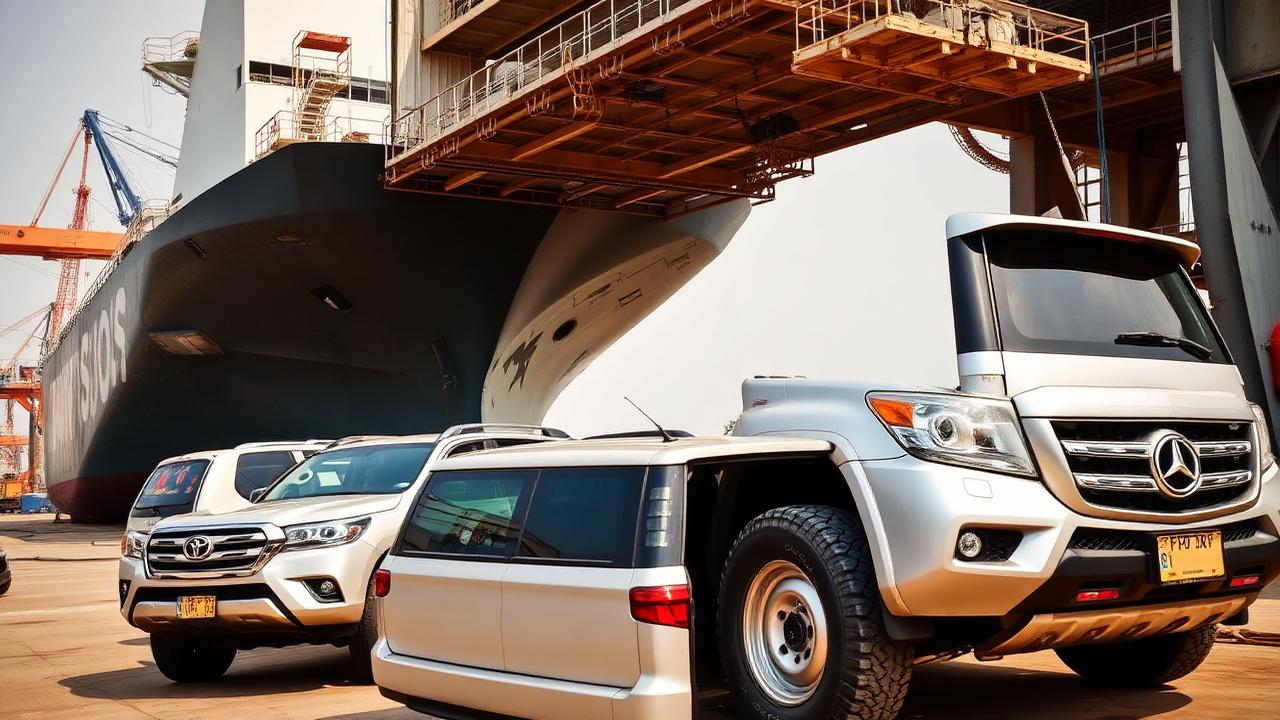
Lagos is the largest used-car import market in West Africa. UK Toyota, Lexus, Mercedes and Range Rover keep their value strongly because of the right-hand-drive heritage of Nigerian roads and the well-known fleet maintenance history. Weekly RORO and shared container arrivals land at Tin Can Island and Apapa. See the core Nigeria shipping page.
2026 shipping costs
RORO Southampton to Tin Can Island from £1,150. Shared container Felixstowe to Lagos from £1,650. Dedicated 20ft from £3,200, 40ft from £4,100. Run the live calculator for your exact vehicle.
NCS duty, SONCAP and the age rule
Nigeria Customs Service charges 35% duty plus 7.5% VAT on CIF value, with the 70% effective rate (duty + levy + VAT compounded) on commercial entry. Vehicles older than 15 years from year of manufacture are banned for permanent import. SONCAP conformity certification is required before loading on certain categories. The UK customs CDS guide handles the export side.
Tin Can Island clearance and timing
Transit 14–21 days RORO, 18–24 days shared container. Clearance typically 5–10 working days with a licensed Nigerian customs agent. Documents: V5C, passport, BL, invoice, Form M and PAAR. Get a free WhatsApp quote on 01482 228366 or use our instant cost calculator. Ship Cars RoRo has shipped vehicles to 50+ countries with full marine insurance and door-to-port handling.
Lagos terminals — Tin Can Island vs Apapa
Lagos has two principal car-handling ports. Tin Can Island Port (TCIP) handles most UK RORO arrivals via Grimaldi and is the default discharge for our weekly Southampton sailing. Apapa Port handles a higher share of container traffic and is the typical discharge for shared and dedicated container shipments from Felixstowe. The two ports differ in clearance speed: Tin Can averages 5–8 working days for a private car with a competent agent, Apapa 7–12 working days with the heavier container procedure. Both have direct rail and trucking links to the rest of southern Nigeria. Avoid PTML or Onne for private car imports — those terminals are oriented to oil-and-gas and add unnecessary cost.
The Form M, PAAR and SONCAP sequence
Every commercial import to Nigeria requires a Form M filed via NCS Trade Hub before shipment leaves the UK. The Form M is matched to a Pre-Arrival Assessment Report (PAAR) that fixes the duty payable based on the agreed CIF value. SONCAP (Standards Organisation of Nigeria Conformity Assessment Programme) applies to most commercial categories and increasingly to private high-value imports — confirm with your Nigerian clearing agent whether your specific car falls inside the SONCAP scope. The Form M plus PAAR plus SONCAP plus Bill of Lading plus commercial invoice and packing list constitute the standard documentation pack at Tin Can clearance. Missing or mismatched values are the most common cause of clearance delay.
Duty calculation worked example for 2026
Take a £15,000 Toyota Land Cruiser from London to Lagos in 2026. Freight £1,150 + insurance £450 = CIF £16,600. Customs duty 35% = £5,810; VAT 7.5% on (CIF + duty) = £1,681; ETLS levy 0.5% = £83; CISS 1% = £166; SUV levy 15% on CIF = £2,490. Total duties and taxes at Tin Can: £10,230. Add port handling (~£280), terminal charges (~£190), clearing agent (~£350) and onward transport in Nigeria (£150–£300). Landed total: roughly £27,500 on Lagos plates for a UK £15,000 Land Cruiser, a familiar 75–85% mark-up that is still strongly profitable on resale at £35,000–£40,000 in 2026 Lagos market prices.
The 15-year age rule and how it is enforced
Nigeria's 15-year age rule (counted from year of manufacture, not first registration) is the single most common cause of UK-Nigeria shipment rejection. A car manufactured in 2010 cannot be imported in 2026, regardless of UK first registration date. NCS verifies age from the VIN and the V5C. Vehicles found inside the cut-off are either returned to the UK at the shipper's cost or auctioned by NCS. Always cross-check the manufacturing date with the chassis plate (not the V5C date of first registration) before booking. The rule is reviewed annually in the Nigerian Finance Bill, so confirm the current cut-off year before quoting a buyer.
After clearance — registration, plates and resale
Once cleared, the vehicle moves to a state-level VIO (Vehicle Inspection Office) for roadworthiness inspection, then to FRSC for plate issue under the Lagos State or other state allocation. Lagos plates take 7–14 days for private registration in 2026 with a vehicle licence office. Resale through the popular Berger, Mile-2 or Lekki markets benefits from a full UK service history and matching VIN documentation. For a deeper view of the wider African export market see our Africa vehicle export guide.
Choosing a Nigerian clearing agent — what to look for
Lagos clearance lives or dies by the agent. A competent NCS-licensed agent will: hold a current customs licence (verify the licence number on NCS public registry), have a desk inside Tin Can Island terminal, file Form M and PAAR in 1–2 days, settle duty within 24 hours of vessel arrival, and provide written cost transparency (not 'come and see at the port'). Red flags: cash-only requests, refusal to provide a written quotation, no physical office, claims of 'special connections' that justify above-tariff fees. Our nominated Lagos partner provides a fixed-fee clearance service with full receipts, typically £350–£450 all-in plus statutory duty. The wrong agent can add £1,500–£3,000 of unexplained 'expediting' costs on a single shipment.
Onward trucking, registration and resale channels
Once cleared at Tin Can, the vehicle either drives out under a temporary movement permit or moves on a flatbed to the buyer's state. Lagos state registration through any FRSC-approved licence office takes 7–14 days for private plates, 14–21 for commercial. State stamp duty and registration totals N250,000–N450,000 (£200–£350) in 2026 depending on engine capacity. Resale channels: Berger and Mile-2 in Lagos for mass-market Toyota and Honda, Lekki and VI for premium Mercedes, Range Rover and Lexus, online via Jiji, Cars45 and AutoChek. UK provenance is a strong selling point — full UK service history adds 8–12% to asking price versus equivalent Japanese-origin imports.
UK collection, recovery and onward transport
Before any international shipment, vehicles need to reach the loading port — and many customers ask us to handle the UK leg too. Our recovery and transport network covers every postcode, 24 hours a day.
Start with the main hubs: Car Recovery UK, Vehicle Recovery UK, 24/7 Breakdown Recovery and Nationwide Vehicle Transportation.
City coverage includes London, Birmingham, Manchester, Liverpool, Leeds, Glasgow, Sheffield and Bristol.
Pre-book a port run on a flatbed transporter from Southampton, Portsmouth, Liverpool or Felixstowe via Ipswich, or call 24/7 for breakdown recovery in London, Birmingham or Manchester.
Frequently Asked Questions
What is the duty on a car imported to Nigeria in 2026?
Are old cars allowed into Nigeria?
Do I need SONCAP for a personal car?
Ready to Ship Your Vehicle?
Get a free, no-obligation quote for international vehicle shipping from the UK. Check our destinations or use the cost calculator.
Written by
Zahir
SEO & Logistics Expert
Zahir is a seasoned SEO strategist and content writer specializing in international logistics, vehicle shipping, and automotive culture. With over a decade of experience in the shipping industry, he provides expert insights to help customers navigate the complexities of international vehicle transport.