

Everything you need to know about shipping electric vehicles internationally — battery regulations, compliance, and special handling requirements.
The Growing Demand for EV Shipping
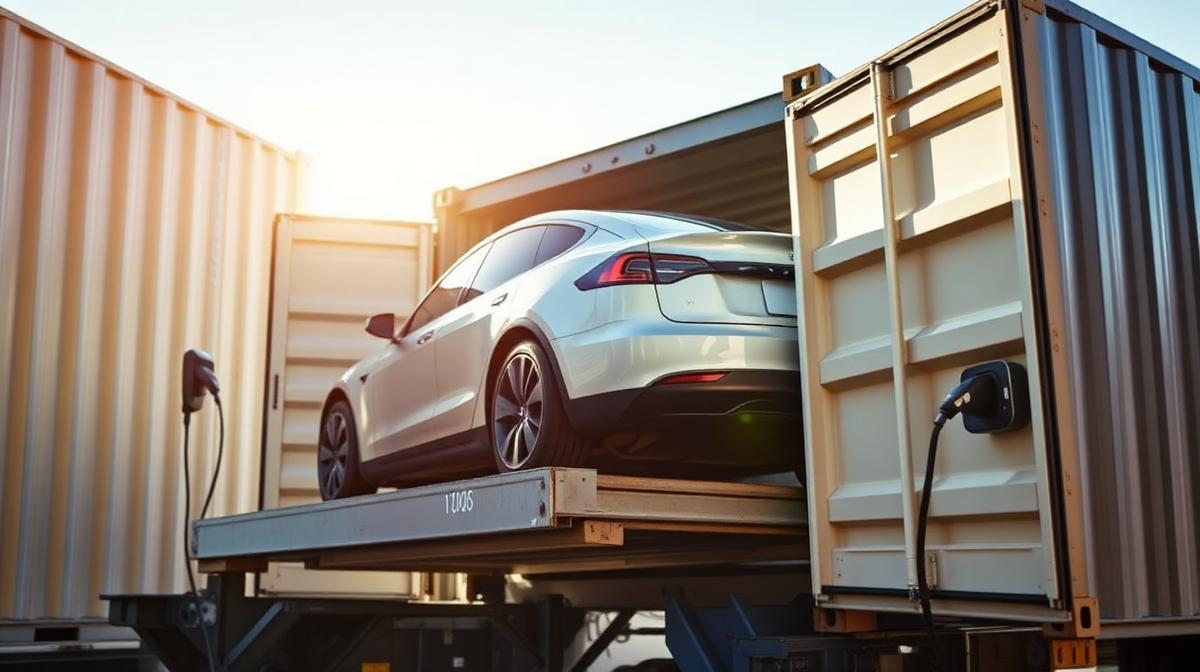
As electric vehicle adoption accelerates worldwide, international shipping of EVs has become a significant part of the vehicle logistics industry. Whether you're relocating with your Tesla, exporting a Jaguar I-PACE, or shipping a Nissan Leaf to a new market, understanding the unique requirements for EV shipping is essential.
EVs present specific challenges for international shipping that don't apply to internal combustion engine (ICE) vehicles:
• Lithium-ion battery regulations under international maritime dangerous goods codes
• State of charge requirements for safe ocean transport
• Destination-specific EV import regulations and incentives
• Charging infrastructure considerations at ports
Ship Cars RoRo has extensive experience shipping all types of electric vehicles, from compact city cars to luxury performance EVs, across all our international destinations.
Battery Regulations and IMDG Compliance
The biggest difference between shipping an EV and a conventional vehicle is the lithium-ion battery. Under the International Maritime Dangerous Goods (IMDG) Code, lithium-ion batteries are classified as Class 9 dangerous goods.
Key requirements:
• State of Charge (SoC): The battery must be charged to no more than 30% of its total capacity for shipping. This is a strict IMDG requirement.
• Battery condition: The battery must be in good condition with no signs of damage, swelling, or electrolyte leakage.
• UN certification: The battery must have been tested and certified to UN38.3 standards. All major manufacturer batteries comply.
• Documentation: A Dangerous Goods Declaration may be required, listing the battery specifications.
In practice, most shipping lines now have well-established procedures for handling EVs. Ship Cars RoRo manages all IMDG documentation and ensures your EV meets all regulatory requirements for safe ocean transport.
Shipping Methods for EVs
Both RORO and container shipping. EV-specific surcharges are itemised on our car shipping costs guide< are available for electric vehicles:
RORO Shipping:
• Available for most EVs on most routes
• Vehicle must be drivable (charged enough to board — typically 15–30% SoC)
• Standard RORO rates apply — no surcharge for EVs on most shipping lines
• The vehicle will need enough charge to be driven on and off the vessel
Container Shipping:
• Preferred for high-value EVs like Tesla Model S Plaid, Porsche Taycan, etc.
• Battery SoC still must not exceed 30%
• Some shipping lines require additional documentation for containerised EVs
Cost: EV shipping costs are generally the same as equivalent ICE vehicles. Rates are based on vehicle dimensions, not powertrain type. See our shipping costs guide for price ranges.
Preparing Your EV for Shipping
In addition to standard vehicle export preparation, EVs require specific steps:
Battery preparation:
• Charge the battery to between 20–30% SoC (never above 30%)
• Disable any scheduled charging or preconditioning features
• Note the exact SoC reading and photograph it for your records
Vehicle settings:
• Disable sentry mode, alarm systems, and any motion-activated features
• Deactivate automatic door handles (Tesla) to prevent accidental deployment
• Set the vehicle to 'transport mode' if available (Tesla offers this feature)
• Turn off any OTA (over-the-air) update downloads
General preparation:
• Clean the vehicle thoroughly, especially for Australian or New Zealand destinations
• Remove all personal items
• Provide two key cards/fobs
• Photograph all panels, interior, and dashboard (including mileage and SoC)
Destination Considerations for EVs
Many countries offer incentives or reduced duties for electric vehicle imports:
- Norway: Zero import duty and reduced registration tax for EVs
• UK imports: Reduced or zero duty under certain trade agreements for EVs
• UAE: Growing EV infrastructure; no specific EV import restrictions
• Australia: State-level EV incentives may offset import costs
• USA: EPA exemptions differ for EVs (no emissions testing required)
Charging at destination: Ensure your destination has compatible charging infrastructure. UK EVs use Type 2 connectors, which are standard in Europe but may need adapters in North America (Type 1/CCS1).
Ready to ship your EV? Get a free quote from Ship Cars RoRo.
UK collection, recovery and onward transport
Before any international shipment, vehicles need to reach the loading port — and many customers ask us to handle the UK leg too. Our recovery and transport network covers every postcode, 24 hours a day.
Start with the main hubs: Car Recovery UK, Vehicle Recovery UK, 24/7 Breakdown Recovery and Nationwide Vehicle Transportation.
City coverage includes London, Birmingham, Manchester, Liverpool, Leeds, Glasgow, Sheffield and Bristol.
Pre-book a port run on a flatbed transporter from Southampton, Portsmouth, Liverpool or Felixstowe via Ipswich, or call 24/7 for breakdown recovery in London, Birmingham or Manchester.
Frequently Asked Questions
Can I ship an electric car via RORO?
Does shipping an EV cost more than a petrol car?
What battery charge level is required for shipping?
Do I need special insurance for shipping an EV?
Ready to Ship Your Vehicle?
Get a free, no-obligation quote for international vehicle shipping from the UK. Check our destinations or use the cost calculator.
Written by
Zahir
SEO & Logistics Expert
Zahir is a seasoned SEO strategist and content writer specializing in international logistics, vehicle shipping, and automotive culture. With over a decade of experience in the shipping industry, he provides expert insights to help customers navigate the complexities of international vehicle transport.