

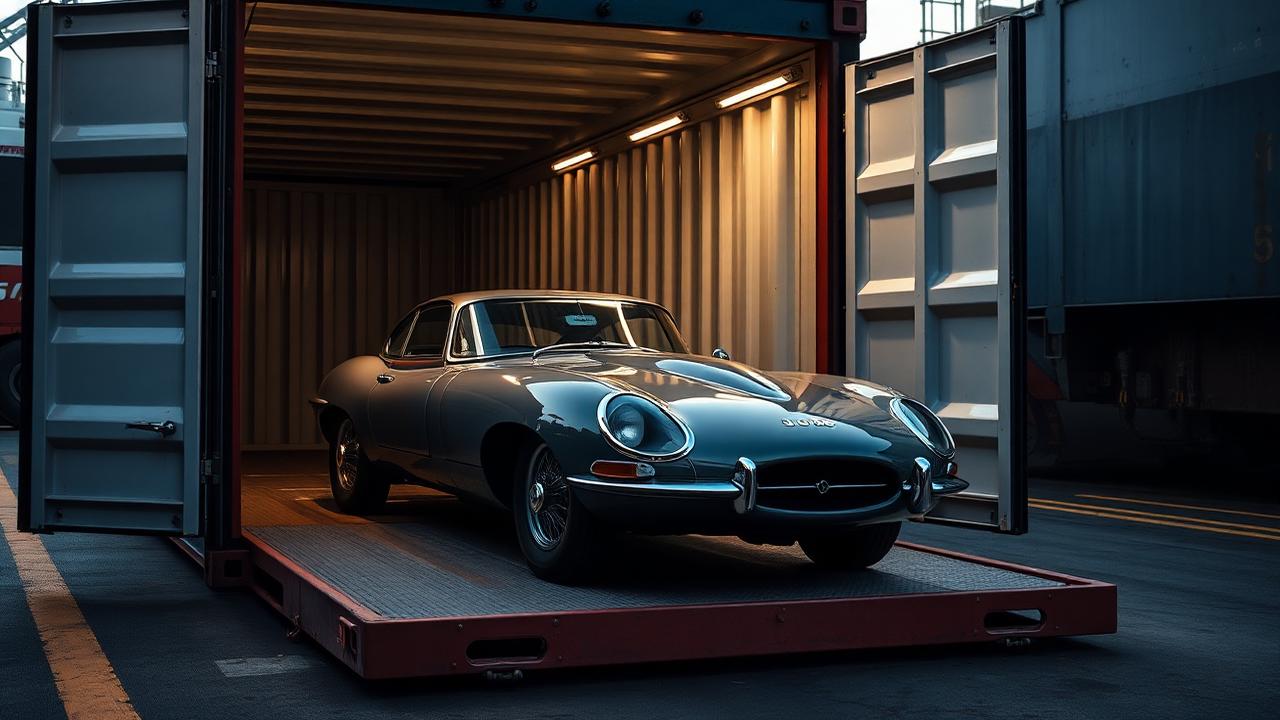
How to ship a classic car from the UK in 2026 — enclosed container, agreed-value insurance, soft-strap securing and concours-grade handling.
Why classic cars demand a different approach
A pre-1980 classic is irreplaceable, often non-original-paint sensitive and frequently non-runner. Standard RORO is rarely the right answer — enclosed containers, soft straps and timber blocking are the norm. See our best classic British cars guide.
Dedicated vs shared container for classics
Dedicated 20ft container is the gold standard — sole vehicle, climate-stable, full control over loading. Shared container is acceptable for sub-£40,000 classics if racking is timber-padded. Compare in the shared vs dedicated container guide.
Agreed-value insurance and handling
Standard total-loss cover undervalues classics. Use agreed-value all-risks marine insurance based on a recent specialist valuation. The insurance explainer covers cover types in detail. Soft-strap wheel nets, hubs only, never on body panels.
Costs and where classics go
Dedicated 20ft container to the USA East Coast from £3,400, to Dubai from £3,200, to Australia from £4,200. Add £200–£400 for premium classic handling. The biggest export markets in 2026 are the USA (25-year rule), Germany, Japan and the UAE. Get a free WhatsApp quote on 01482 228366 or use our instant cost calculator. Ship Cars RoRo has shipped vehicles to 50+ countries with full marine insurance and door-to-port handling.
What makes a classic 'a classic' for shipping purposes
From a shipping perspective, 'classic' is not strictly age-defined. Carriers and insurers usually treat a vehicle as a classic when one or more of these applies: pre-1990 manufacture, agreed value above £25,000, factory or period-correct restoration, original paintwork or rare colour, low odometer or matching-numbers drivetrain, or designated 'historic vehicle' status with the DVLA. The classification matters because it unlocks specialist handling, agreed-value insurance, climate-aware container loading and concours-grade securing — none of which apply to a standard used car. The 25-year US import rule and the broader European 'youngtimer' market mean shipping of 1995–2000 vehicles is rising fast in 2026 as cars cross into the classic bracket.
Preparation before loading — a checklist
A well-prepared classic ships safely; an unprepared one risks a claim. Standard pre-loading preparation: full mechanical check (any underlying leak will worsen at sea), tyres at 25 PSI (lower than driving pressure to avoid flat-spots), fuel at under 25%, battery disconnected and terminals tagged, soft top down (or up and waxed for moisture), interior trim secured, hood ornaments and mascot removed and packed inside the car, vintage radio fascia removed if loose. A waxoyl or hard-wax coat on all chrome and exposed metal prevents salt-air marking on long lanes. We supply a written preparation checklist for every classic booking, and arrange in-house preparation in our Felixstowe yard if the owner prefers.
Climate, condensation and timber-block securing
Sea air is humid and salty, and a poorly-prepared classic can arrive with surface oxidation, condensation marks on chrome and damp interior leather. Three controls manage this: a desiccant pack inside the container (one 1.5 kg bag per 20ft), a breathable car cover only (never a sealed plastic cover), and timber-block securing under axles rather than chassis straps that can leave compression marks. We use 8-point soft-strap wheel nets on most classics, with timber blocking under the chassis for vehicles that cannot accept wheel restraint (some pre-war cars with wire wheels). On long Pacific or Indian Ocean lanes, climate-controlled containers are available at a 20–30% premium and recommended for concours-grade restorations.
Destination duty advantages for classic cars
Several markets give favourable duty treatment to classics, which makes the freight premium more affordable on a total-cost view. UK to USA on a 25-year-old or older vehicle attracts NHTSA and EPA exemption (no costly compliance), with 2.5% duty and minimal state-level burden. UK to Australia personal import on a 25+ year vehicle skips RAWS and SEVS, paying 5% + 10% GST only. UK to Germany on a 30+ year H-Kennzeichen classic attracts reduced tax and free emission-zone access. UK to Japan accepts UK classics under the simplified Article 12 process for over-25-year vehicles. The 25-year rule is the single biggest driver of UK classic exports in 2026.
Specialist insurance and what to expect at delivery
Generic marine insurance does not cover classics correctly. The right cover is agreed-value, all-risks, with a specialist classic-car valuation no older than 12 months from a recognised valuer (Hagerty, Footman James, ClassicLine). Cover should run from collection in the UK to delivery at destination, not just port-to-port. On arrival, insist on a written condition report countersigned at delivery — any new mark must be photographed and recorded immediately to support a claim. Get a free WhatsApp quote on 01482 228366 or use the cost calculator selecting 'Classic Vehicle' for accurate 2026 pricing.
Top UK classics shipped overseas in 2026
The most-shipped UK classics overseas in 2026 are: Land Rover Defender 90/110 (Td5 and Puma — strong USA, UAE, Australia demand), Mini Cooper Mk1–Mk3 (USA and Japan), Jaguar E-Type (USA East Coast and Germany), Aston Martin DB5/DB6/V8 Vantage (Middle East and USA), Range Rover Classic LWB (USA 25-year and UAE), Morgan Plus 4/Plus 8 (USA and Germany), Triumph TR6 and Spitfire (USA), MG MGB and Midget (USA), Lotus Elan and Esprit (Japan and USA), Bentley T-Series and Mulsanne (UAE and USA). Each has unique handling needs — Aston Martin DB-series should never RORO due to ground clearance, Mini Mk1 needs floor-secured timber blocks, E-Type bonnet locks must be checked twice before loading.
Worked example — concours Aston Martin DB5 UK to California
A concours-restored 1965 Aston Martin DB5 from a UK collector to a California buyer in 2026: agreed value £950,000. UK collection on enclosed transporter from Buckinghamshire to Felixstowe £850. Dedicated 20ft climate-controlled container Felixstowe to Long Beach via Panama £6,200. BAF £450, UK terminal £180, customs entry £95, agreed-value all-risks marine insurance 2% £19,000. UK-side total £26,775. US-side: as a 25-year classic, EPA and NHTSA exempt, 2.5% duty on CIF £24,400, customs broker £350, port handling and onward enclosed transport to Beverly Hills £1,800. US-side total £26,550. Landed cost beyond purchase: £53,325, of which £19,000 is insurance — a typical scaling for high-value classics.
UK collection, recovery and onward transport
Before any international shipment, vehicles need to reach the loading port — and many customers ask us to handle the UK leg too. Our recovery and transport network covers every postcode, 24 hours a day.
Start with the main hubs: Car Recovery UK, Vehicle Recovery UK, 24/7 Breakdown Recovery and Nationwide Vehicle Transportation.
City coverage includes London, Birmingham, Manchester, Liverpool, Leeds, Glasgow, Sheffield and Bristol.
Pre-book a port run on a flatbed transporter from Southampton, Portsmouth, Liverpool or Felixstowe via Ipswich, or call 24/7 for breakdown recovery in London, Birmingham or Manchester.
Frequently Asked Questions
Can I ship a classic by RORO?
What insurance do I need for a £60,000 classic?
Ready to Ship Your Vehicle?
Get a free, no-obligation quote for international vehicle shipping from the UK. Check our destinations or use the cost calculator.
Written by
Zahir
SEO & Logistics Expert
Zahir is a seasoned SEO strategist and content writer specializing in international logistics, vehicle shipping, and automotive culture. With over a decade of experience in the shipping industry, he provides expert insights to help customers navigate the complexities of international vehicle transport.